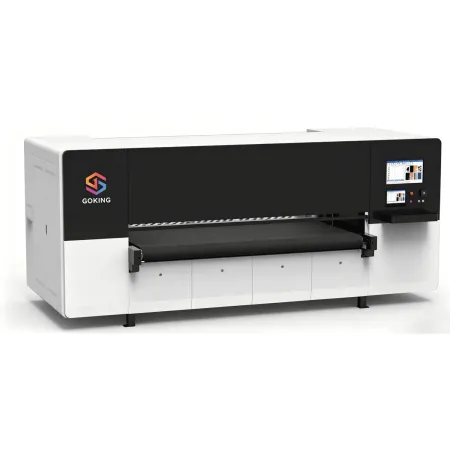
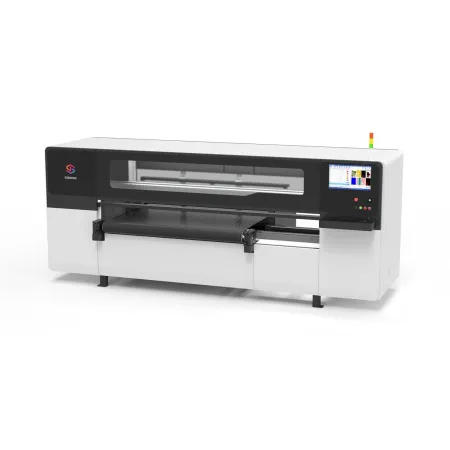
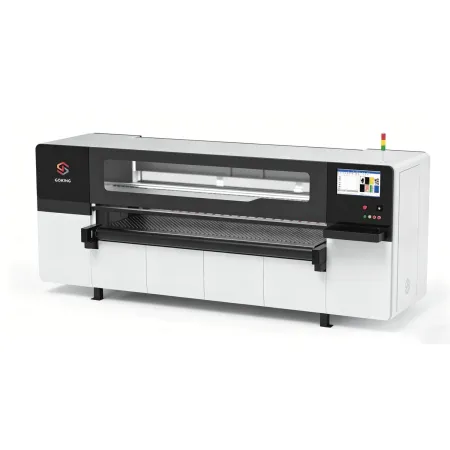
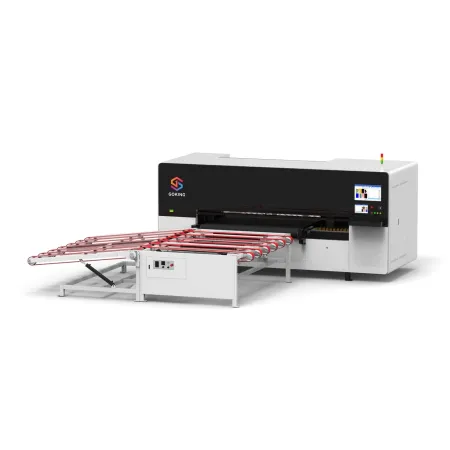
High-Resolution Digital Printer for Water-Resistant Pigments: Precision Printing That Survives Moisture
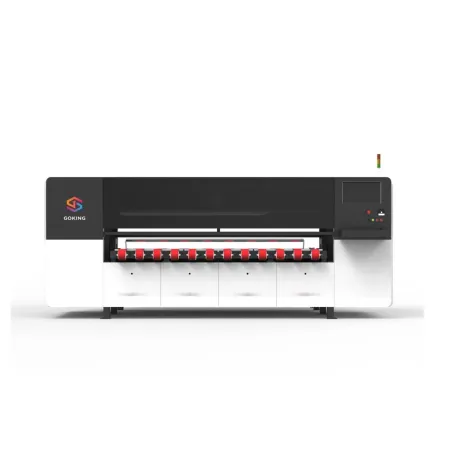
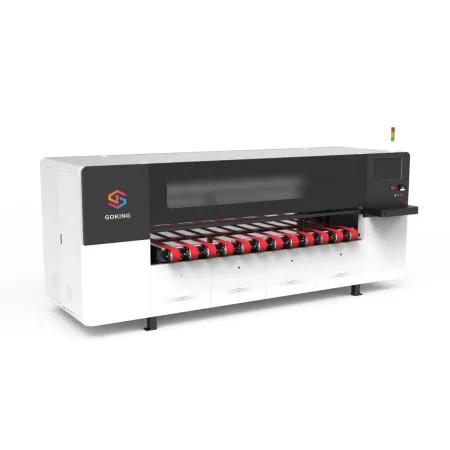
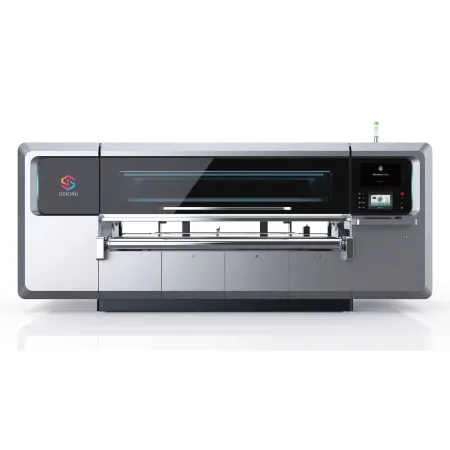
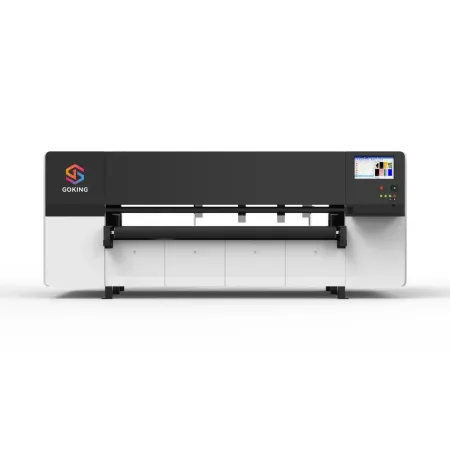
When packaging must carry crisp barcodes, fine regulatory text, and detailed brand graphics—and survive condensation, rain, or refrigeration—a high-resolution digital printer for water-resistant pigments becomes a non-negotiable production asset. Goking’s Epson-powered digital printers achieve 1200 DPI print resolution while laying down UV-curable pigment inks that bond permanently to the substrate surface. The result is packaging print that stays sharp and legible even after prolonged moisture exposure—a combination traditional flexo workflows struggle to deliver without multiple post-print coating steps.
Why Resolution Matters for Water-Resistant Printing
Water-resistant performance is only half the equation. If the print itself is blurry or inconsistent, water resistance adds no value. High-resolution output ensures that every printed element—from 6-point ingredient lists to QR codes and barcodes—remains scannable and readable after exposure to moisture. In logistics applications, a smeared barcode means a rejected shipment. In food packaging, illegible allergen text creates liability. A high-resolution digital printer for water-resistant pigments addresses both concerns in a single pass.
The Micro Piezo printhead technology in Goking’s Epson-series machines controls droplet placement with sub-pixel precision. Each ink droplet lands exactly where intended, forming a uniform pigment film that cures into a continuous water-resistant barrier. Lower-resolution alternatives produce uneven ink coverage—thin spots become entry points for moisture, causing localized bleeding and blurring.
How 1200 DPI Enables Water-Resistant Pigment Performance
DPI—dots per inch—directly governs the density of ink deposition across the substrate. At 1200 DPI, Goking printers place 1,440,000 ink dots per square inch. This density creates an effectively seamless pigment film that leaves no gap for water molecules to penetrate. At 600 DPI, the dot density drops to 360,000 per square inch, which remains adequate for many corrugated applications but provides less redundancy against moisture ingress on uncoated surfaces.
| Resolution Parameter | 600 DPI Output | 1200 DPI Output |
|---|---|---|
| Dots per square inch | 360,000 | 1,440,000 |
| Minimum legible font size | 8pt | 5pt |
| Barcode scannability after moisture | Reliable (Grade C+) | Excellent (Grade A) |
| Fine detail water resistance | Good | Superior |
| Pigment film uniformity | Adequate | Near-seamless |
The practical difference becomes most visible in cold-chain environments. Condensation forms on packaging as it moves from freezer to ambient temperature. At 600 DPI, fine print may show slight feathering at the edges. At 1200 DPI, the pigment density maintains edge definition through multiple freeze-thaw cycles—critical for frozen food, seafood, and pharmaceutical cold-chain packaging.
Goking High-Resolution Printer Configurations
Goking offers multiple 1200 DPI configurations designed for water-resistant pigment printing across different production scales and substrate types:
- J-series multi-pass, 1200 DPI: Available with 8, 12, or 16 Epson printheads. Print widths of 264mm, 400mm, or 525mm. Production speeds up to 1,500 m/h. Ideal for short-to-medium runs requiring high detail on corrugated sheets, coated paper, and kraft board.
- J-series multi-pass, 1200 DPI, five-color: Configurable with 16, 24, or 32 Epson printheads. Adds white ink (W) to CMYK for printing on dark or kraft substrates. Essential when water-resistant white text or highlights are needed on brown corrugated surfaces.
- G-series single-pass, 1200 DPI equivalent: Achieves comparable sharpness at production speeds of 45–70 m/min using 24 or 32 Epson printheads. Designed for high-volume converters who cannot compromise on either speed or resolution.
Each configuration supports CMYK computer color matching and adjustable DPI settings, giving operators the flexibility to balance resolution against throughput depending on job requirements. A short-run premium gift box might demand full 1200 DPI; a bulk logistics label run might drop to 600 DPI for speed while maintaining water-resistant pigment integrity.
Substrate Compatibility at High Resolution
Water-resistant pigment printing at 1200 DPI performs across the full range of packaging substrates Goking machines support—A, B, C, and E flute corrugated board, honeycomb board, coated paper, and kraft paper. The key to consistent high-resolution output on absorbent surfaces like kraft is the UV-curable ink chemistry: the ink sits on the surface and cures instantly under UV LED lamps rather than absorbing into the fibers, which would cause dot gain and resolution loss.
Coated paper substrates provide the sharpest results because the coating layer creates a smooth, non-absorbent surface. Combined with 1200 DPI pigment deposition, coated paper packaging achieves near-offset print quality with full water resistance—no lamination or post-print varnishing required. This simplifies the production chain and eliminates an entire consumable cost line.
Applications Where High-Resolution + Water Resistance Is Critical
- Frozen food packaging: Condensation forms during thaw cycles; 1200 DPI barcodes and ingredient text must remain scannable and legible.
- Beverage multipacks: Cans and bottles sweat in retail coolers; packaging graphics must not bleed or transfer.
- Pharmaceutical logistics labels: Regulatory text often at 6pt or smaller; water-resistant pigment printing prevents critical information loss in transit.
- Export corrugated boxes: Ocean freight exposes packaging to humidity and potential water contact; high-resolution country-of-origin markings and handling symbols must remain clear.
- Premium gift boxes: Detailed brand graphics printed with water-resistant pigments maintain visual quality even when handled with damp hands or stored in humid environments.
Production Efficiency with High-Resolution Water-Resistant Printing
A common concern among converters is that high-resolution printing slows production. Goking addresses this through configurable DPI: operators select the resolution appropriate to each job. A corrugated box destined for dry retail storage may print at 600 DPI for maximum throughput; the same machine switches to 1200 DPI for cold-chain packaging in a single software setting change—no hardware swap, no downtime beyond the normal job change interval.
Additionally, the no-plate-making digital workflow means a high-resolution digital printer for water-resistant pigments requires no flexo plate production, no plate storage, and no plate cleaning between jobs. One-minute job changes enable mixed high-resolution and standard-resolution runs within the same production shift, maximizing machine utilization without sacrificing quality on premium jobs.See how Goking’s digital solutions stack up across key performance dimensions—explore the 1200 DPI multi-pass digital printer specifications or learn about Epson printhead configurations for detailed technical data.
High-Resolution Water-Resistant Printing: FAQ
Q: Does 1200 DPI printing slow down the machine?
In multi-pass mode, 1200 DPI requires additional printhead passes, reducing throughput compared to 600 DPI within the same model. However, single-pass G-series machines achieve production speeds of 45–70 m/min without DPI-related slowdown because all colors are deposited in one pass regardless of resolution setting.
Q: Is water-resistant performance the same at 600 DPI and 1200 DPI?
The chemical water resistance of the cured pigment ink is identical regardless of DPI. The practical difference is in edge definition and fine-detail retention after moisture exposure. At 600 DPI, large solid areas resist water equally well, but small text and thin lines may show slight degradation. At 1200 DPI, the higher dot density provides margin against moisture ingress at the micro scale.
Q: Can I run 1200 DPI on uncoated kraft paper?
Yes. UV-curable pigment inks cure on the surface of uncoated substrates rather than absorbing into the fibers. While the visual sharpness on uncoated kraft may not match coated paper, the water-resistant properties remain fully effective, and 1200 DPI still provides measurable improvement in fine-detail clarity compared to 600 DPI on the same substrate.
Resolution and water resistance are not separate variables—they reinforce each other. A pigment film that is dense and uniform resists moisture at every point; a film that is sparse creates vulnerabilities. Goking’s Epson-powered high-resolution digital printer for water-resistant pigments delivers both density and uniformity through precision piezoelectric drop control and UV-curable chemistry, producing packaging print that remains sharp, scannable, and compliant through the full distribution cycle. For packaging converters serving moisture-sensitive markets, this combination eliminates an entire category of print-quality complaints tied to water exposure.