Energy-Efficient Digital Printing Machine for Kraft Paper: Technical Solutions for Natural Substrate Printing
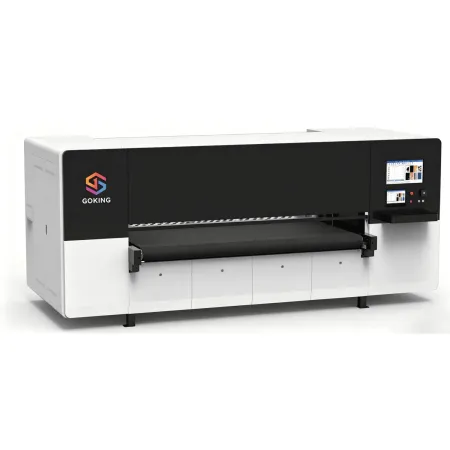
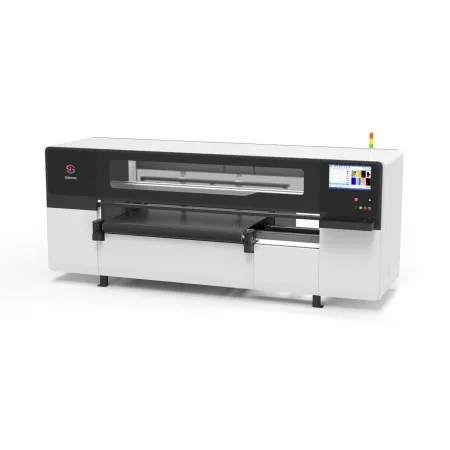
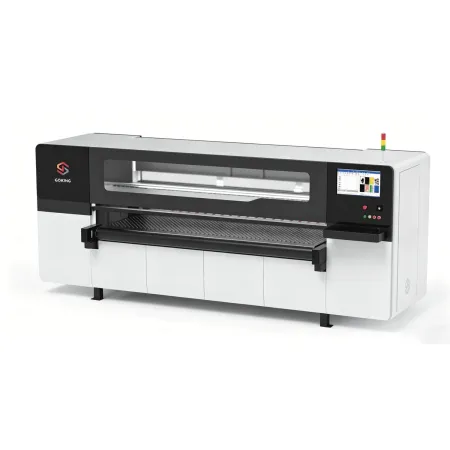
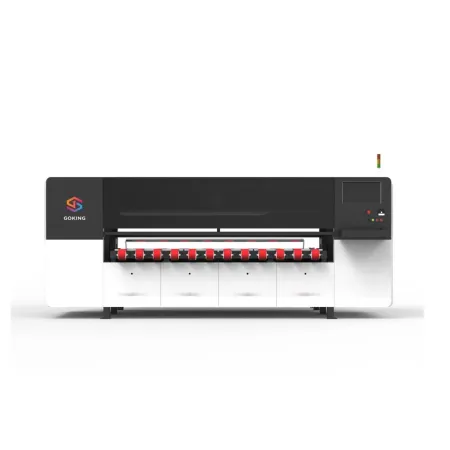
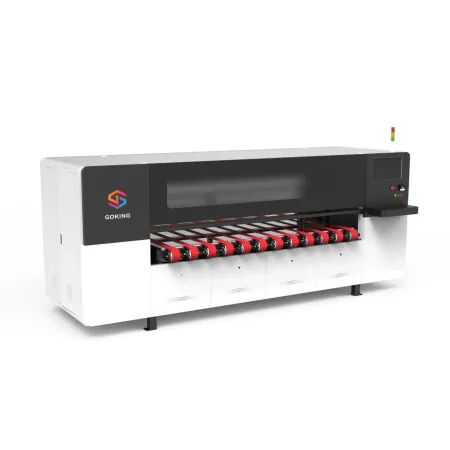
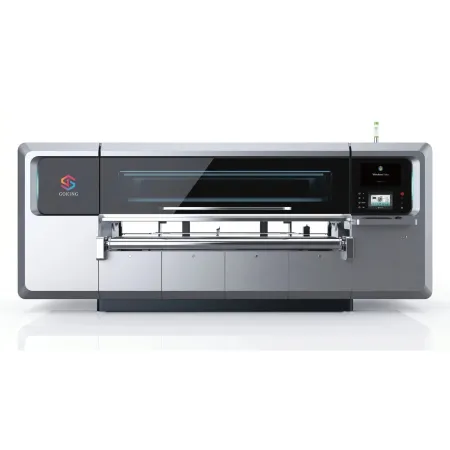
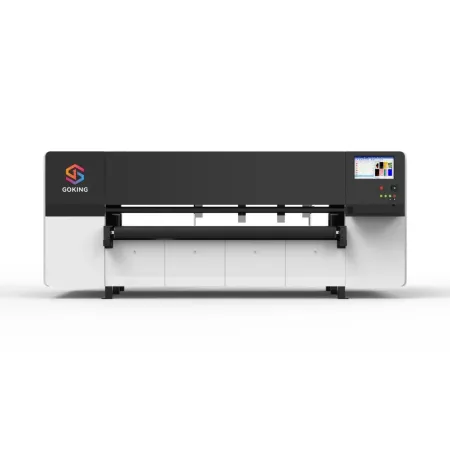
Kraft paper presents unique printing challenges that distinguish it from coated or bleached substrates: its absorbent surface pulls ink into the fiber matrix, its natural brown coloration shifts the perceived color of translucent inks, and its texture demands precise droplet placement to maintain edge definition. An energy-efficient digital printing machine for kraft paper engineered with these substrate characteristics in mind delivers the print quality, color accuracy, and production efficiency that converters require while maintaining the low power consumption profile that supports both margin health and sustainability objectives. Goking's J-series, G-series, and GJ-series digital printing platforms each address kraft paper printing from different production perspectives, providing converters with options matched to their specific volume, quality, and operational requirements.
Why Kraft Paper Demands a Specialized Digital Printing Approach
Printing on kraft paper differs fundamentally from printing on white or coated stocks, and converters who apply standard color profiles designed for bright substrates inevitably produce disappointing results on natural kraft. The brown fiber base shifts cyan toward green, magenta toward brown, and yellow toward ochre—each deviation compounding when colors combine in process printing. An energy-efficient digital printing machine for kraft paper addresses this through substrate-specific color management that compensates for the kraft background before ink reaches the substrate. Goking's CMYK color matching system incorporates ICC profiles calibrated specifically for kraft paper grades, applying ink-limiting algorithms optimized to control dot gain on the absorbent surface while maintaining saturation despite the underlying brown tone. The five-color CMYKW configuration proves especially valuable for kraft applications: the white ink channel lays down an opaque underbase in image areas, isolating CMYK inks from the kraft background and restoring color accuracy to brand-specified values. This combination of intelligent color management and white ink capability transforms kraft from a challenging substrate into a production material that delivers predictable, repeatable results.
What Machine Configurations Best Serve Kraft Paper Production?
Kraft paper applications span e-commerce mailers, retail shopping bags, industrial packaging, foodservice wraps, and sustainable brand cartons—each with distinct throughput, width, and quality requirements. Selecting the right energy-efficient digital printing machine for kraft paper means matching platform capabilities to the specific kraft applications in a converter's order portfolio.
Kraft Paper Application Matrix
| Kraft Application | Platform | Width Range | Speed | Color Advantage |
|---|---|---|---|---|
| Branded e-commerce mailers | J-series Multi-Pass | 264–525mm | 700–1500 m/h | White ink underbase |
| Retail kraft shopping bags | G-series Single-Pass | 400–1050mm | 45–80 m/min | High-volume throughput |
| Foodservice kraft packaging | Xaar Industrial | 200–400mm | 500–1000 m/h | Heavy ink coverage |
| Single-color kraft marking | Seiko Industrial | 400–1800mm | 70–110 m/min | Wide-format single-pass |
Converters focused on branded kraft packaging where color accuracy matters should prioritize Epson-powered platforms with CMYKW capability. The white ink channel serves as the critical enabler for reproducing bright brand colors on dark kraft backgrounds, a capability that opens kraft paper to markets where brand consistency previously required bleached substrates.
How Does Ink Absorption Affect Energy-Efficient Digital Print Quality on Kraft?
Kraft paper's absorbency—a desirable property for packaging durability and sustainability—creates a technical challenge for inkjet printing that directly impacts perceived print quality. When ink droplets contact uncoated kraft fibers, capillary action draws the liquid into the paper structure, spreading the dot beyond its intended diameter and reducing edge sharpness. An energy-efficient digital printing machine for kraft paper manages this behavior through several complementary mechanisms. First, Goking's ink formulations use optimized viscosity and surface tension parameters that control penetration rate without requiring thermal acceleration—preserving the low power consumption advantage. Second, the variable droplet technology in Epson S3200 printheads allows the RIP to adjust dot size based on image content, deploying smaller dots in fine-detail areas where spread matters most and larger dots in solid regions where coverage takes priority. Third, the printhead-to-substrate distance remains precisely controlled throughout production, maintaining consistent droplet flight characteristics as the absorbent kraft surface passes beneath the head array. These factors collectively produce sharp text, clean edges, and controlled dot gain on kraft substrates that traditionally challenge digital printing systems.
Built for Kraft: Manufacturing Precision from Dongguan Huangjiang
Consistent print quality on kraft paper demands consistent machine build quality—variation in printhead alignment, transport tension, or substrate guidance produces visible defects that the absorbent, unforgiving kraft surface amplifies. Goking addresses this requirement through centralized manufacturing at its 10,000 square meter facility in Dongguan Huangjiang, where every energy-efficient digital printing machine for kraft paper undergoes alignment verification, color calibration, and substrate transport testing before shipment. The facility's dedicated production lines for J-series, G-series, and GJ-series platforms maintain standardized assembly procedures that ensure the printhead-to-substrate geometry critical for kraft printing remains within specification from machine to machine. For converters operating multiple kraft printing lines across different facilities, this manufacturing consistency simplifies production standardization and reduces the variable-adjustment overhead that non-uniform equipment imposes.
What Sustainability Advantage Does Digital Kraft Printing Offer?
Kraft paper already carries strong sustainability credentials: it derives from renewable wood fiber, recycles readily through established waste streams, and biodegrades naturally without persistent environmental impact. Printing on kraft using an energy-efficient digital printing machine for kraft paper extends this sustainability narrative to the production process itself. The elimination of printing plates removes photopolymer waste from the supply chain and avoids the solvent-based cleaning chemistry that analog platemaking requires. Digital inkjet applies ink only where the image data specifies, eliminating the ink return flows and fountain solution management that flexographic kraft printing generates. The low power consumption architecture—no thermal curing, no high-energy drying tunnels, no plate imaging equipment—directly reduces the carbon footprint attributed to the printing stage. For brand owners who specify kraft packaging specifically for its environmental profile, the ability to communicate that the printing process itself follows the same low-impact philosophy adds credibility to the overall sustainability message. The ERP integration capability further contributes by optimizing job scheduling to minimize machine idle time, ensuring that the power consumed directly corresponds to productive output.
Kraft Paper Printing: Resolution and Speed Considerations
The relationship between resolution, speed, and image quality on kraft substrates differs from that on coated papers, and converters should understand these differences when configuring an energy-efficient digital printing machine for kraft paper. The table below outlines how resolution choices affect kraft print output and recommended settings for different application types.
| Resolution | Kraft Performance | Best Application | Speed Trade-off |
|---|---|---|---|
| 600 DPI | Adequate for text >8pt, solid logos | Industrial kraft marking | Faster throughput |
| 1200 DPI | Sharp text, smooth gradients | Branded kraft packaging | Moderate speed reduction |
For most branded kraft applications, 1200 DPI provides the text clarity and image definition that brand owners expect. Converters printing simple text and graphics on kraft at industrial scale may find that 600 DPI delivers acceptable quality at higher throughput, especially when combined with the single-pass G-series architecture that eliminates the speed-resolution trade-offs inherent in multi-pass scanning.
How Does the No-Plate Workflow Reduce Kraft Production Costs?
Traditional kraft printing—particularly for branded applications requiring multiple colors—imposes plate costs on every design. A four-color kraft bag design requires four photopolymer plates, each carrying material, imaging, and processing costs. Version the design for three retailers, and the plate cost triples. An energy-efficient digital printing machine for kraft paper eliminates this cost entirely by rendering artwork directly from digital files without any intermediate physical tooling. This structural cost elimination changes what types of kraft printing orders become profitable: short runs with design variation, single-customer branded mailers with personalized elements, and regional kraft packaging variants all become economically viable when plate costs drop to zero. The 1-minute changeover capability further strengthens this economics by allowing kraft converters to process multiple designs within a single production shift without incurring downtime between jobs. For converters serving brand owners who increasingly request seasonal kraft packaging refreshes, limited-edition kraft mailer campaigns, and region-specific kraft bag designs, the digital workflow economics create competitive advantages that analog printing cannot replicate.
What Role Does the Single-Pass G-Series Play in Kraft Volume Production?
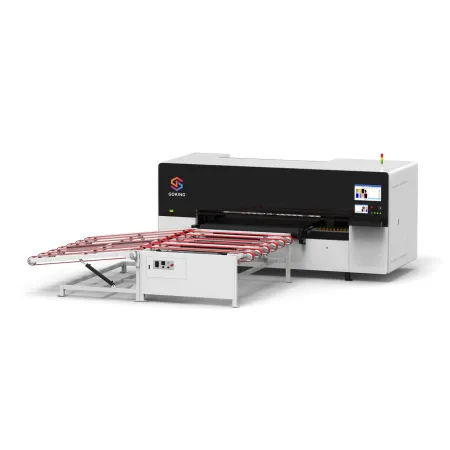
When kraft paper printing scales to volume applications—retail shopping bag programs, e-commerce mailer series, or foodservice packaging runs requiring tens of thousands of units—the G-series single-pass architecture delivers the throughput that makes digital production competitive with analog methods. An energy-efficient digital printing machine for kraft paper configured in single-pass mode deploys 12 to 32 Epson printheads in a fixed linear array spanning the full print width, processing substrates up to 1050mm wide at 45 to 80 meters per minute. The five-color configuration handles process-color kraft graphics with or without white underbase, depending on the substrate shade and brand color requirements. Because the printheads remain stationary while the substrate passes beneath in a single linear motion, the mechanical energy consumption stays low relative to scanning-head architectures—a factor that contributes to the G-series' favorable energy-per-unit metric on high-volume kraft runs. For converters making the transition from flexographic to digital kraft production at volume, the G-series single-pass platform provides the bridge between digital flexibility and analog throughput expectations.
Frequently Asked Questions About Digital Kraft Paper Printing
Q: Does digital printing on kraft paper require pre-treatment?
Goking's aqueous pigment inks achieve good adhesion and color density on most uncoated kraft grades without pre-treatment, thanks to optimized ink chemistry and the variable droplet control of Epson S3200 printheads. For extremely absorbent or recycled-content kraft where ink holdout becomes an issue, a light primer application improves results, though many converters find that adjusting the digital front end's ink-limiting parameters achieves acceptable quality on standard kraft without added processing steps.
Q: How does white ink opacity perform on dark kraft paper?
The white ink channel in Goking's CMYKW configuration provides sufficient opacity for most branded kraft applications, laying down a controlled underbase that isolates process colors from the brown substrate. For applications requiring maximum white opacity—bright brand colors on very dark kraft—a double-pass white underbase mode increases coverage at a proportional reduction in throughput, a configurable option within the digital front end.
Q: Can the same machine print on both kraft and white substrates?
Yes. An energy-efficient digital printing machine for kraft paper handles the full range of packaging substrates, switching between kraft, white-top, coated, and specialty materials through profile changes in the digital front end. The machine applies substrate-appropriate color management and ink-limiting parameters automatically when the operator selects the material from the production queue, requiring no physical adjustments to transition between kraft and white stock.
Q: What is the expected ink consumption rate on kraft versus coated paper?
Kraft paper's absorbent surface typically consumes 15 to 25 percent more ink than coated stocks to achieve equivalent color density, a factor converters should build into their cost models. Goking's ink-limiting algorithms and substrate-specific ICC profiles optimize this consumption, applying only the ink volume required to reach target density without over-saturating the kraft fibers, where excess ink contributes to bleed-through rather than improved color appearance.
Converters serving the growing kraft packaging market should evaluate an energy-efficient digital printing machine for kraft paper against their specific application requirements, considering the substrate grades they process, the color accuracy their customers demand, and the production volumes their order book supports. Goking's portfolio—spanning Epson, Xaar, and Seiko printhead configurations across multi-pass, single-pass, and hybrid architectures—provides converters with platform options matched to every kraft printing scenario. The combination of white ink underbase capability, substrate-specific color management, no-plate workflow economics, and purposefully low power consumption positions these digital platforms as the logical production choice for kraft packaging converters preparing for a market where sustainability credentials, brand color accuracy, and production flexibility increasingly determine competitive success. From the 10,000 square meter facility in Dongguan Huangjiang, Goking delivers production-proven equipment engineered specifically for the technical demands of kraft substrate printing.